Hook
Manually documenting datasets in Domo is a losing battle — the moment you finish, something changes. Domo's Wrangle API gives you a programmatic path to an automated Data Dictionary, but the Python you write to get there needs to hold up under real-world conditions.
Why It Matters
An unmaintained Data Dictionary is worse than no dictionary at all — stale metadata actively misleads analysts. Automating it through the Wrangle API means your column descriptions, types, and lineage stay in sync without manual effort. But prototype-quality Python that works once in a notebook won't survive in production: unhandled edge cases, no retry logic, and brittle assumptions about API responses will eventually break your pipeline silently.
What You'll Learn
- Call Domo's Wrangle API to read and write dataset metadata programmatically
- Refactor notebook-style Python into more modular, reusable functions
- Identify common code smells in beginner API scripts and fix them
- Understand why defensive patterns (input validation, error handling) matter when calling external APIs
- Structure code so it's easier to extend when Domo's schema or your data model changes
From Notebook Hack to Robust API Client
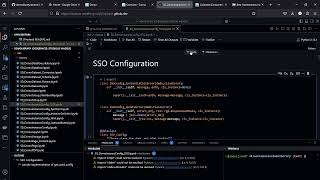
The code review starts from a working-but-fragile Jupyter notebook — the kind of script that gets written fast to prove a concept but quickly becomes a liability. The refactor focuses on a few high-leverage improvements.
The first is function decomposition: pulling inline logic out into named functions with single responsibilities. This makes the API call sequence easier to test and reason about — you can mock a single function rather than rerunning an entire notebook cell chain.
The second pattern is defensive API consumption: the Wrangle API returns JSON, and the raw response isn't always shaped the way you expect. The refactored code adds explicit checks before indexing into nested structures, avoiding the silent KeyError or None dereference that only surfaces when a dataset has unusual metadata.
Third is separating configuration from logic — API credentials, dataset IDs, and field mappings get pulled out of the function bodies and into a clear config layer. This is the difference between code you can hand off to a teammate and code that only works on your machine with your hardcoded values.
The video uses a real notebook from the datacrew repo as the starting point, so you can follow along with the exact before-and-after. If you're building any kind of Domo automation in Python, the refactoring decisions here apply directly to your own scripts.