Hook (1-2 sentences): Wiring up a reusable Endpoint class for Domo's text generation API sounds like a clean abstraction — until authentication bites you and the whole thing refuses to work inside a Domo instance.
Why It Matters
Without a proper endpoint abstraction, every chatbot you build requires you to manually handle auth, format request bodies by hand, and repeat yourself across routes. A working Endpoint class would let you swap models, adjust temperature, and reuse the same interface across tools — but Domo's API constraints make that harder than expected. This video documents exactly where that approach breaks down, which is just as useful as a success: you'll know which assumptions to throw out before you start.
What You'll Learn
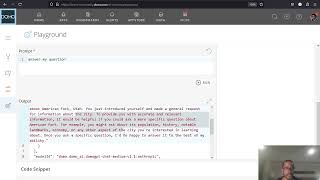
- Build a synchronous chat route that correctly hits Domo's text generation API
- Format the request body with
input,prompt_template, andmodelfields as Domo expects them - Choose between access token and session token authentication for requests made inside a Domo instance
- Configure model selection across providers (Anthropic, OpenAI, custom enterprise models)
- Understand why the Endpoint class pattern fails here and what that implies for how you architect Domo AI integrations
Where the Chat Route Works and the Endpoint Class Doesn't
The chat route itself is straightforward: a synchronous POST to domo.com's text generation API with a correctly formatted body. That body needs at minimum an input field (the user's message), a prompt_template, and a model — in this case, Anthropic via Domo's out-of-the-box configuration. One open question in the video is whether additional parameters like temperature or context can be passed through the template — Domo's internal documentation on this was sparse even from the engineering team.
Authentication follows the same pattern used elsewhere in the Domo Library: either an access token or a session token depending on how your instance is configured. Neither is exotic, but both require the request to be properly formatted before you're off to the races.
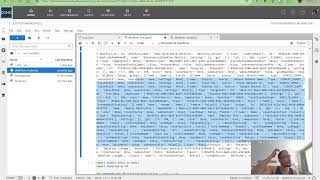
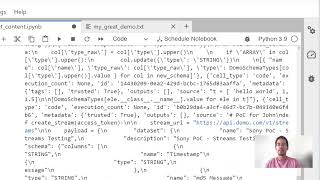
Where things fall apart is the Endpoint class abstraction built on top of this. The class itself compiles and the route logic is sound, but getting it to execute correctly inside a Domo environment exposed constraints that weren't obvious from the API surface. The video is transparent about this — the Endpoint class didn't work, and the debugging process is shown rather than hidden.
For developers building on top of Domo AI, the practical takeaway is to validate your auth flow against the raw API before layering any abstraction on top of it. The chat route pattern shown here is a reliable foundation; the Endpoint wrapper is a pattern to approach carefully until Domo's tooling matures around it.